Hot topic · Church and money
What does the Bible say about greedy pastors? Druski’s “Collect & Praise,” the prosperity gospel and the verses on money
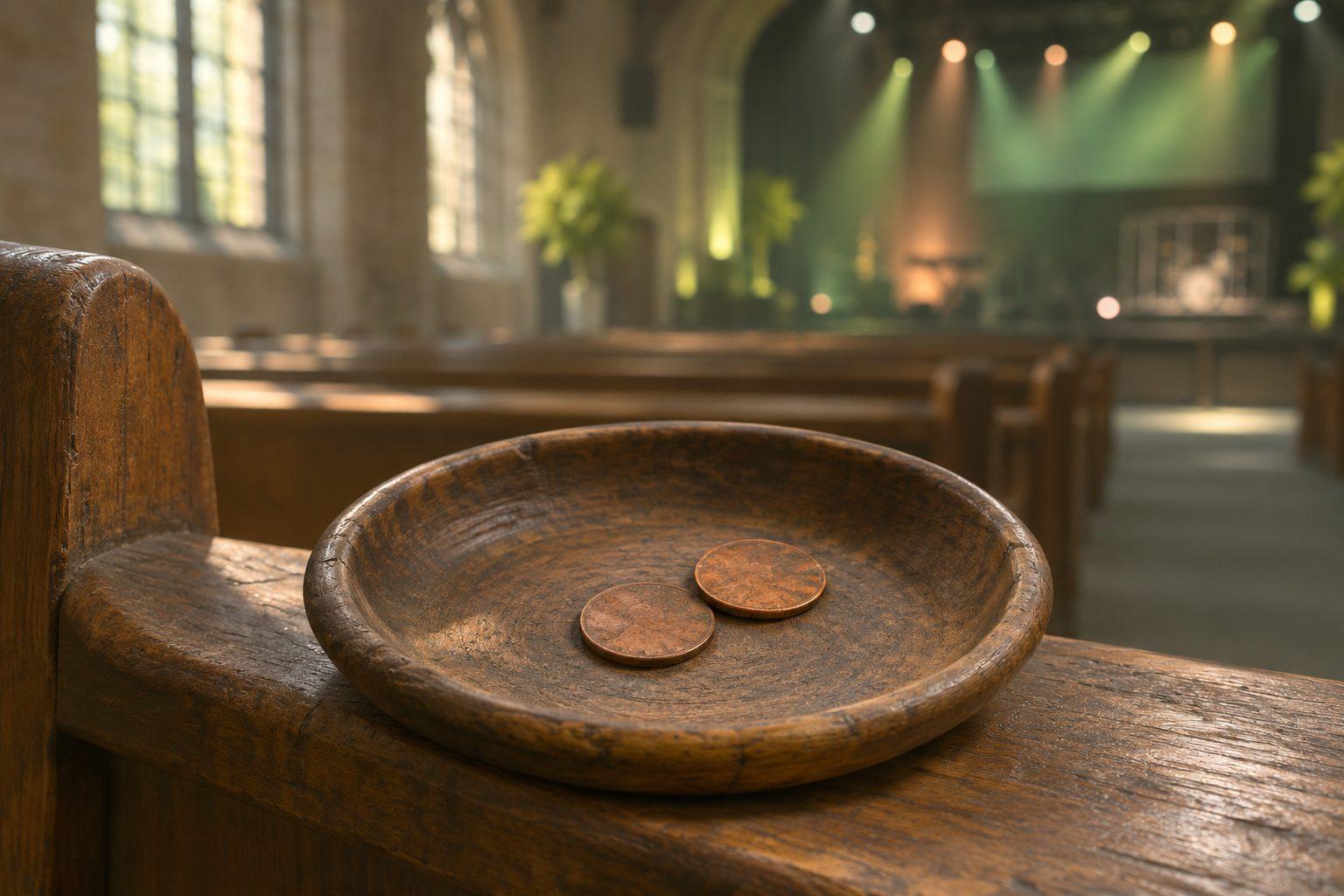
The Bible is blunt about greedy pastors: a shepherd of God’s flock must serve “not out of greed, but out of eagerness” (1 Peter 5:2), an overseer must not be “greedy for money” (Titus 1:7), and the New Testament warns that false teachers “in their greed” will exploit people with deceptive words (2 Peter 2:3). It also says, just as plainly, that a pastor may be paid: “The worker is worthy of his wages” (1 Timothy 5:18). So the line the Bible draws is not between paid and unpaid ministers. It is between serving people and using them. The question is in the news because the comedian Druski, whose sketch of a money-hungry megachurch pastor went viral this year, hosts NBC’s Saturday Night Live on November 7, 2026, and brings that pastor to Netflix in a series called Collect & Praise on December 1. Below: what is in the news, what the Bible says about pastors and money, the “prosperity gospel” the sketch mocks, how churches differ, and our view, which is that the joke lands because it is true, and that the answer is a church that would be boring to parody.
Why it is in the news
In January 2026 Druski, a comedian who built his audience on social media, posted a sketch of an over-the-top megachurch preacher. As Cassius Life described it on January 14, the pastor is lowered over his congregation through stage smoke, preaches in front of a screen reading “Collect & Pray,” explains that he wears designer labels because he is a Christian, calls for millions in a single offering, kisses piles of cash, and finally drives off in his Bentley after learning that the man asking him for prayer has not tithed. TheWrap reported that the sketch drew more than 70 million views. Some viewers called it “spot on” and said it mocked greed in megachurches, not God; others said it went too far and unfollowed him.
On November 2, 2026, TheWrap reported that Netflix had signed a multiyear deal with Druski. The first project is Collect & Praise, a semi-scripted comedy premiering on December 1 that follows, in TheWrap’s words, “a money-hungry pastor (Druski) and his unpredictable deacon (Mike Epps).” On November 7 he hosts Saturday Night Live, with the Strokes as musical guest; TheWrap called him the first digital creator to host the show, and “Saturday Night Live Druski” was among the day’s rising searches on Google Trends in the United States. The character is fictional, and this page makes no claim about any real pastor. But millions of people now have a picture of a greedy pastor in their heads, and many of them are asking whether the Bible has anything to say about it. It does, a great deal.
What the Bible says about pastors and money
The clearest instruction is Peter’s charge to the elders of the churches he wrote to, men he calls his fellow elders:
2 Be shepherds of God’s flock that is among you, watching over them not out of compulsion, but willingly, as God would have you; not out of greed, but out of eagerness; 3 not lording it over those entrusted to you, but being examples to the flock.Read 1 Peter 5 in context · Berean Standard Bible →
Paul’s lists of qualifications for church leaders say the same thing three times: an overseer must be “free of the love of money” (1 Timothy 3:3) and “not greedy for money” (Titus 1:7), and deacons must not be “greedy for money” (1 Timothy 3:8). He also warns of teachers who “for the sake of dishonorable gain” upset whole households (Titus 1:11). To Timothy he describes men who “regard godliness as a means of gain” (1 Timothy 6:5), and then gives the warning most people half-remember:
9 Those who want to be rich, however, fall into temptation and become ensnared by many foolish and harmful desires that plunge them into ruin and destruction. 10 For the love of money is the root of all kinds of evil. By craving it, some have wandered away from the faith and pierced themselves with many sorrows.Read 1 Timothy 6 in context · Berean Standard Bible →
It is “the love of money,” not money, that Paul calls the root of all kinds of evil, and he says it straight after describing teachers who treat godliness as a way to get rich. Peter’s second letter is sharper still: false teachers will come, and “in their greed, these false teachers will exploit you with deceptive words” (2 Peter 2:3). The prophets said it centuries earlier: Micah condemned a Jerusalem where “her priests teach for a price, and her prophets practice divination for money,” while still saying “Is not the LORD among us?” (Micah 3:11).
Jesus himself had little patience with religion run for profit. He drove the traders out of the temple courts and overturned the money changers’ tables, saying “you are making it ‘a den of robbers’” (Matthew 21:12–13). He warned against religious leaders who love long robes and the best seats and “defraud widows of their houses, and for a show make lengthy prayers” (Mark 12:38–40); in the very next scene in Mark and Luke he praised a poor widow’s two small coins (Luke 21:1–4). And when Simon the magician tried to buy the apostles’ power, Peter answered, “May your silver perish with you, because you thought you could buy the gift of God with money!” (Acts 8:20). That episode gave the church its word for selling spiritual things: simony.
What the Bible does not say
It does not say pastors should be poor, or unpaid. Paul writes that “the Lord has prescribed that those who preach the gospel should receive their living from the gospel” (1 Corinthians 9:14), and that elders who lead well, “especially those who work hard at preaching and teaching,” are “worthy of double honor,” adding, “The worker is worthy of his wages” (1 Timothy 5:17–18). A church that underpays its pastor while enjoying his labour is not more spiritual than one that pays him fairly.
What the Bible holds up as the example, though, is a minister who could take more and chooses less. Paul worked with his hands so as not to be a burden, preached in Corinth “free of charge” (2 Corinthians 11:7–9), and could tell the Ephesian elders, “I have not coveted anyone’s silver or gold or clothing” (Acts 20:33–35). Jesus sent his disciples out with the words “Freely you have received; freely give” (Matthew 10:8). The Bible does not set a salary. It sets a direction: a pastor’s money should flow toward the flock, not out of it.
Nor does the Bible say that every wealthy church or well-paid pastor is corrupt. Large churches have large budgets, and many use them for food banks, schools and missions. The test Scripture gives is not the size of the building but the heart behind it and the honesty of the books.
The prosperity gospel and its verses
The sketch’s real target is what is usually called the prosperity gospel: the teaching that God wants every believer to be rich and healthy, and that faith, and especially giving to the ministry, is the way to unlock it. It is not a fringe belief. In a Lifeway Research survey of 1,010 American Protestant churchgoers, taken in August 2017 and published in July 2018, 69% agreed that “God wants me to prosper financially,” and 38% agreed that their church teaches that if they give more money to the church and charities, God will bless them in return. Scott McConnell of Lifeway said, “A significant group of churches seem to teach that donations trigger a financial response from God.”
The teaching leans on a handful of verses. In Malachi, God tells Israel to bring “the full tithe into the storehouse” and “test Me in this,” promising to “open the windows of heaven” (Malachi 3:10). Jesus says, “Give, and it will be given to you,” a measure “running over” (Luke 6:38). John writes to a friend, “I pray that in every way you may prosper and enjoy good health” (3 John 2).
Read in context, none of them carries the weight put on it. Malachi 3 is addressed to Israel under the covenant, and the tithe went to the storehouse “so that there may be food in My house”; under the Law the tithe fed the Levites and, every third year, the foreigner, the fatherless and the widow (Deuteronomy 14:28–29), not a preacher’s private account. Luke 6:38 comes in a passage about mercy, forgiveness and not judging, and its next words are “with the measure you use, it will be measured back to you”; it is not a cash-return formula. 3 John 2 is an ordinary greeting, the ancient version of “I hope you are well.” Against them stand Jesus’ warning that it is easier for a camel to pass through the eye of a needle than for a rich man to enter the kingdom (Mark 10:25), Paul’s “godliness with contentment is great gain” (1 Timothy 6:6), his “I have learned to be content regardless of my circumstances” (Philippians 4:11–13), and Hebrews: “Keep your lives free from the love of money and be content with what you have” (Hebrews 13:5). The Bible does promise that God provides and that generosity is blessed. It never promises that the gift buys the blessing. Paul says each person should give “not out of regret or compulsion. For God loves a cheerful giver” (2 Corinthians 9:7), which is the opposite of an offering extracted by pressure from the stage.
Is it wrong to laugh at a pastor parody?
Some Christians felt the sketch mocked the church, and it is fair to ask whether a believer should laugh at it. The Bible is not humourless about false religion. Elijah, facing the prophets of Baal, “began to taunt them, saying, ‘Shout louder, for he is a god! Perhaps he is deep in thought, or occupied, or on a journey. Perhaps he is sleeping and must be awakened!’” (1 Kings 18:27). Jesus’ picture of leaders who strain out a gnat and swallow a camel (Matthew 23:24) is a joke with a point. Satire of religious hypocrisy is old, and much of it is in Scripture.
The line is what is being mocked. Laughing at a fraud who sells God is close to what Elijah and Jesus did; laughing at God, at prayer, or at a faithful pastor who works for little is something else. A viewer can enjoy the first and refuse the second, and should notice which one a particular joke is doing.
How Christians differ
Catholic. The Catechism of the Catholic Church calls simony, “the buying or selling of spiritual things,” a sin against the first commandment (paragraphs 2121 and 2139), quoting Peter’s rebuke of Simon. It says ministers should ask nothing for the sacraments beyond the offerings set by the competent authority, and must never let poverty keep anyone from them; it also says the faithful should support their ministers (2122). In a 2018 essay in La Civiltà Cattolica, a Jesuit journal reviewed at the Vatican before publication, Antonio Spadaro and Marcelo Figueroa called the prosperity gospel a “pseudo-gospel” with a “perverse effect on the poor”; the essay is the authors’ view, not an official teaching.
Orthodox. Orthodox churches keep the ancient canons against buying office. The Council of Chalcedon (451), whose canons the Orthodox and Catholic churches both receive, ruled in its second canon that a bishop who ordains anyone for money, putting “to sale a grace which cannot be sold,” should lose his rank, and so should the man ordained. The Orthodox tradition also honours voluntary poverty in monastic life, and its preachers, from John Chrysostom on, have been severe on wealth used for show.
Evangelical Protestant. Most evangelical leaders reject the prosperity gospel by name. The Cape Town Commitment (2010), drawn up at the Lausanne Movement’s third congress of evangelical leaders from around the world, affirms a biblical vision of human flourishing but rejects as unbiblical the idea that spiritual welfare can be measured by material welfare or that wealth is always a sign of God’s blessing, and a 2014 Lausanne consultation warned that some prosperity teaching may “parody the grace of God.” Many evangelicals also teach the tithe, a tenth of income given to the local church, as a normal Christian practice, and they draw a sharp line between it and promising riches in return. The Lifeway numbers show the message has not reached every pew.
Word of Faith and prosperity Pentecostal. Teachers in the Word of Faith movement argue that God wants believers to flourish in every part of life, including money and health, that poverty is part of the curse Christ came to break, and that faith and giving are how believers lay hold of that promise. They point to the verses above and to Abraham’s wealth, and many of their followers, especially in poorer communities, say the message gave them hope and discipline. Other Pentecostal and evangelical leaders, including many in Africa and Latin America, have become some of its strongest critics; the 2014 Lausanne consultation quoted above met near São Paulo. These are general summaries; within every tradition, members disagree.
Our take
This is our opinion, not a report. The joke lands because it is true, so build a church that would be boring to parody.
The prosperity gospel is not a different emphasis within the faith; it is a different message. A gospel in which the offering buys the blessing is exactly what Peter rebuked in Simon, and it falls hardest on the people Jesus most defended: the widow who gives all she has, the struggling family told that their poverty is a lack of faith. Druski did not invent the pastor descending through the smoke and leaving in the Bentley. He exaggerated something many people have actually seen, and when a comedian’s sketch reads like an illustration of 2 Peter 2:3, Christians should feel the sting before they feel offended.
But the cure is not cynicism. Most pastors are not in the sketch: they earn modest salaries, visit hospitals at night and quietly pay for a family’s groceries. Do not use the joke as an excuse to stop giving or to assume every preacher is a crook. Use it as a checklist. A healthy church publishes its accounts, sets its pastor’s pay through people the pastor does not control, never promises a return on an offering, and makes it easy to give in secret, as Jesus said (Matthew 6:3–4). A church like that is safe from Collect & Praise, because there is nothing there to laugh at.
Over to you
What is one thing a church does with money that makes you trust it more, and one thing that would make you walk out? Tell us below.
Comments
No comments yet. Start the conversation; comments are public and checked for spam. How comments are handled