Hot topic · Church history and Scripture
Reformation Day 2026 (October 31): what Luther did in 1517, the verse behind it, and why Christians still disagree
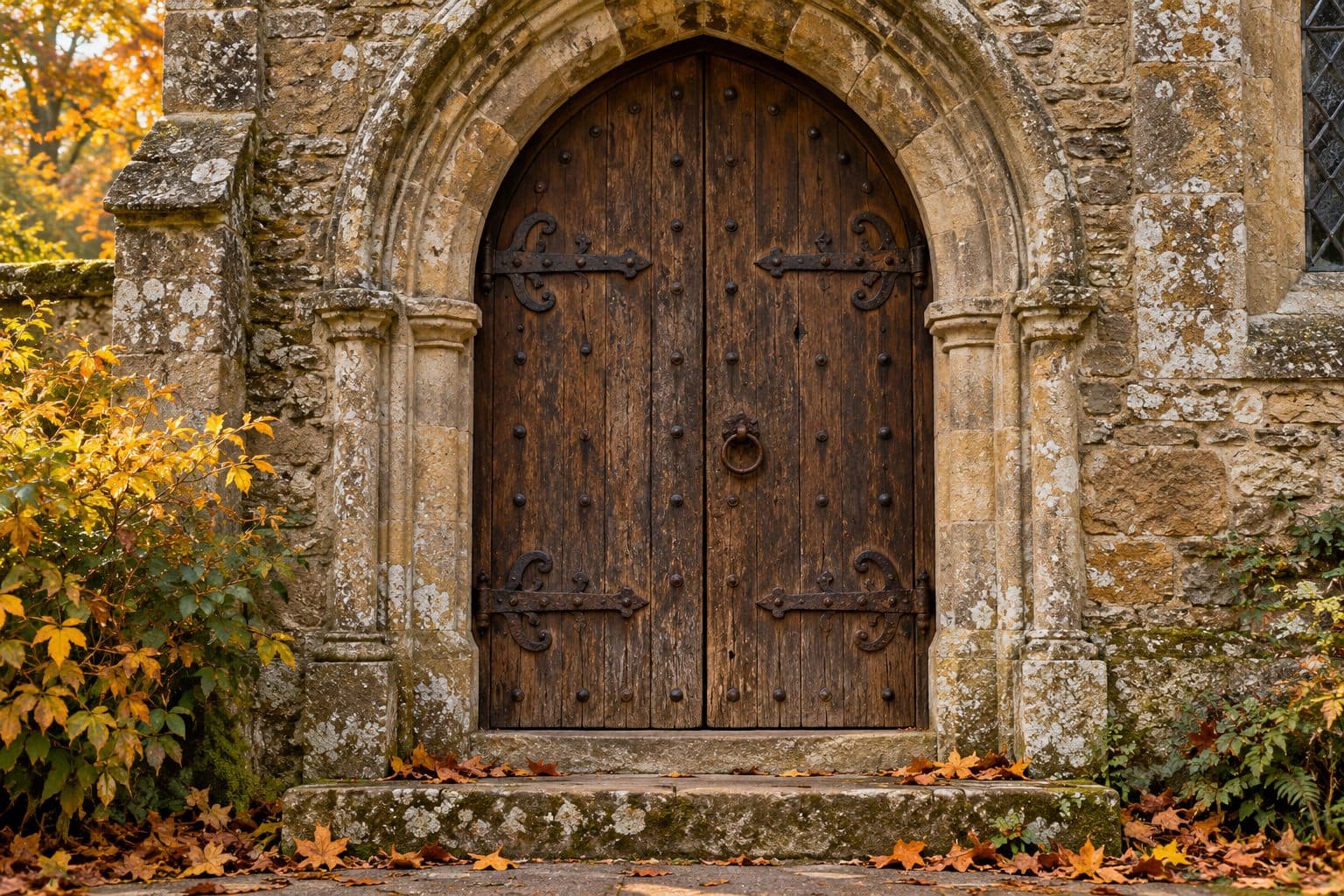
Reformation Day falls on Saturday, October 31, 2026, and many Lutheran and other Protestant churches keep it a week early, on Reformation Sunday, October 25. It remembers October 31, 1517, the day Martin Luther, a monk and professor at Wittenberg in Germany, sent his Ninety-five Theses against the sale of indulgences to the Archbishop of Mainz. That letter set off the Protestant Reformation. Whether Luther also nailed the theses to a church door that day is still debated. For Protestants the day celebrates the rediscovery of salvation by grace through faith, found in verses such as Romans 1:17. For Catholics and Orthodox it is not a feast, and in 2016 Catholics and Lutherans marked it together for the first time, in a commemoration that included repentance for the division. This page covers the date, what happened in 1517, the Bible verses behind it, and how each tradition sees it. In Our take we argue that Luther was right about the indulgence preaching, right about Paul’s meaning but wrong to add “alone” to Romans 3:28, and that the day is no victory lap.
When is Reformation Day 2026?
Reformation Day: Saturday, October 31, 2026, the 509th anniversary of 1517.
Reformation Sunday: Sunday, October 25, 2026. The Evangelical Lutheran Church in America’s worship planning guide says Reformation Day may be transferred to the preceding Sunday, and the Presbyterian Church (U.S.A.) also lists October 25, 2026, as Reformation Sunday. Practice varies, so a local church may keep it on another date.
Is it a public holiday? In Germany, October 31 is a statutory holiday in nine of the sixteen states: Brandenburg, Mecklenburg-Western Pomerania, Saxony, Saxony-Anhalt and Thuringia in the east, and Bremen, Hamburg, Lower Saxony and Schleswig-Holstein in the north, which added it in 2018. For the 500th anniversary in 2017 it was a one-time holiday across all of Germany. In Chile, a law of 2008 (Law 20.299) made October 31 a national public holiday, the Day of the Evangelical and Protestant Churches; in some years it moves to a Friday, but in 2026 it stays on Saturday, October 31. In most other countries, including the United States, the United Kingdom and Canada, it is a church observance, not a public holiday.
What happened on October 31, 1517
In 1517, preachers in the region around Wittenberg were selling a papal indulgence whose proceeds were to help pay for the rebuilding of St Peter’s Basilica in Rome. In Catholic teaching an indulgence remits the temporal punishment still due for sins already forgiven (Catechism of the Catholic Church, 1471); Luther objected that the preaching led ordinary people to trust a purchased letter instead of true repentance.
On October 31, 1517, Luther wrote to Albrecht, Archbishop of Mainz, under whose name the indulgence was being preached, and enclosed his theses. He dated the letter “From Wittenberg on the Vigil of All Saints, MDXVII” (Works of Martin Luther, 1915 translation). The theses themselves were framed as propositions for an academic debate at Wittenberg, and Luther invited those who could not attend to reply in writing. Printed copies spread quickly through Germany, and within a few years the dispute over indulgences had become a dispute over the authority of the pope, the councils and Scripture, and over how a sinner is made right with God.
Did Luther nail the theses to the door?
The famous picture of Luther hammering the theses to the door of the Castle Church in Wittenberg is less certain than the letter. The earliest account comes from Luther’s colleague Philip Melanchthon in 1546, after Luther’s death, and Melanchthon arrived in Wittenberg only after the event. Since the early 1960s, when the Catholic historian Erwin Iserloh questioned it, historians have argued over whether the posting happened at all; some recent scholars consider the question unanswerable (as reported by R. Scott Clark, Heidelblog, 2020). Posting notices of academic disputations on the church door was a normal university practice, so a posting is plausible, but it is not documented by Luther himself. What is documented is the dated letter: either way, the Reformation began on the eve of All Saints.
What the Ninety-five Theses said
The theses are short and pointed. The quotations below come from the 1915 English translation in Works of Martin Luther, which is in the public domain.
- Thesis 1 opens with Jesus’ call to repent (Matthew 4:17) and says that the Lord willed the whole life of believers to be one of repentance.
- Thesis 27 attacks the indulgence slogan: “They preach man who say that so soon as the penny jingles into the money-box, the soul flies out [of purgatory].”
- Thesis 36: “Every truly repentant Christian has a right to full remission of penalty and guilt, even without letters of pardon.”
- Thesis 43: “Christians are to be taught that he who gives to the poor or lends to the needy does a better work than buying pardons.”
- Thesis 62: “The true treasure of the Church is the Most Holy Gospel of the glory and the grace of God.”
- Thesis 86 repeats a question Luther says lay people were asking: why did the pope, richer than the richest, not build St Peter’s with his own money rather than with the money of poor believers?
In 1517 Luther still accepted purgatory and the pope’s office; the theses criticize abuses and ask for debate. His break with Rome came over the next four years, ending in his excommunication in 1521.
The verse behind the Reformation
Protestants celebrate Reformation Day less for the theses than for what Luther came to believe about the gospel. The key text was Paul’s letter to the Romans:
16 For I am not ashamed of the gospel of Christ: for it is the power of God unto salvation to every one that believeth; to the Jew first, and also to the Greek. 17 For therein is the righteousness of God revealed from faith to faith: as it is written, The just shall live by faith.Read Romans 1 in context · King James Version →
Paul is quoting the prophet Habakkuk: “the just shall live by his faith” (Habakkuk 2:4), a line also quoted in Galatians 3:11 and Hebrews 10:38. In the preface to his collected Latin writings (1545), Luther recalled that he had hated the phrase “the righteousness of God,” because he understood it as the justice by which God punishes sinners. When he understood it instead as the righteousness God gives, by which the righteous live by faith, he wrote that he felt born again, as if he had entered paradise through open gates. Scholars debate when this breakthrough happened. Luther’s account links it to 1519, when he had begun lecturing on the Psalms again, which would place it after the theses; many historians date it earlier, between about 1513 and 1518.
The other passages most often read on the day make the same point: “by grace are ye saved through faith; and that not of yourselves: it is the gift of God: not of works, lest any man should boast” (Ephesians 2:8–9), and “a man is not justified by the works of the law, but by the faith of Jesus Christ” (Galatians 2:16).
Romans 3:28 in five editions, and the word “alone”
No verse shows the dispute better than Romans 3:28. Read it in all five of the site’s editions, including the Catholic Douay–Rheims:
| Edition | Romans 3:28 |
|---|---|
| Berean Standard Bible | For we maintain that a man is justified by faith apart from works of the law. |
| World English Bible | We maintain therefore that a man is justified by faith apart from the works of the law. |
| American Standard Version | We reckon therefore that a man is justified by faith apart from the works of the law. |
| King James Version | Therefore we conclude that a man is justified by faith without the deeds of the law. |
| Original Douay–Rheims | For we account a man to be justified by faith without the works of the Law. |
None of these editions, Protestant or Catholic, has the word “alone” here, and neither does the Greek. Luther’s 1522 German New Testament did: he rendered the verse with “allein durch den Glauben”, “through faith alone”. Accused of tampering with Scripture, he defended the choice in his Open Letter on Translating (1530). He admitted that the word is not in the Latin or Greek text, but argued that German idiom and Paul’s meaning required it.
Catholic readers point to James 2:24: “by works a man is justified, and not by faith only”. It is the only verse in all five editions above that pairs faith with “only” or “alone”: the KJV and Douay–Rheims read “not by faith only”, the BSB “not by faith alone”. Protestant readers answer that James is describing the faith that proves itself in works, not adding works as a ground of salvation, and they read Paul’s “works of the law” as any human effort to earn God’s favor. The Council of Trent, in its decree on justification (Session VI, 1547), rejected the teaching that the sinner is justified by faith alone in the sense that nothing else is required. That is where the two sides stood for more than four centuries.
Reformation Sunday readings
Churches that use the Revised Common Lectionary have a set of readings for Reformation Day, which Lutheran churches also use on Reformation Sunday. Read them here in the King James Version:
- Jeremiah 31:31–34: the new covenant written on the heart.
- Psalm 46: “God is our refuge and strength”, the psalm behind Luther’s hymn Ein feste Burg, “A Mighty Fortress Is Our God”.
- Romans 3:19–28: justified freely by grace, through faith.
- John 8:31–36: “the truth shall make you free”.
How each tradition sees the day
Lutheran. Reformation Day is a festival in Lutheran calendars, kept with red paraments, A Mighty Fortress and the readings above. Lutherans celebrate the gospel of grace rather than Luther himself, and many Lutheran churches now also keep the day with ecumenical prayer.
Reformed, Presbyterian and other Protestants. Reformed and Presbyterian churches commonly keep Reformation Sunday; the Presbyterian Church (U.S.A.) offers bulletin inserts from the Presbyterian Historical Society for it. Some evangelical and Reformed churches hold Reformation Day events on October 31 as an alternative to Halloween. Many other Protestant churches, including many Baptist, Pentecostal and nondenominational congregations, do not mark it in worship at all.
Catholic. The Catholic Church does not celebrate Reformation Day; for Catholics October 31 is the vigil of All Saints. But the relationship has changed. On October 31, 1999, in Augsburg, the Catholic Church and the Lutheran World Federation signed the Joint Declaration on the Doctrine of Justification. It states a consensus in basic truths: that sinners are accepted by God by grace alone, through faith in Christ’s saving work and not because of any merit, and are renewed by the Holy Spirit for good works. It also states that the sixteenth-century condemnations do not apply to the teaching of either side as presented in the declaration. The World Methodist Council affirmed the declaration in 2006, and the World Communion of Reformed Churches and the Anglican Communion followed in 2017. On October 31, 2016, Pope Francis and Bishop Munib Younan, president of the Lutheran World Federation, led a joint commemoration in Lund Cathedral in Sweden. Their joint statement says, “we have learned that what unites us is greater than what divides us”, and also that “Lutherans and Catholics have wounded the visible unity of the Church.” The statement names one difference that still divides them: Lutherans and Catholics cannot yet share the Eucharist.
Orthodox. Reformation Day has no place in the Orthodox calendar. The Orthodox churches were not party to the sixteenth-century division in the West, which arose inside the Latin Church, and they do not frame salvation in the terms of the Western debate over justification.
Our take
This is our own view, not a ruling for any church, and Catholic, Lutheran and evangelical readers will each find something here to disagree with.
On the indulgence preaching, Luther was simply right. As Luther described the preaching, the campaign promised that a soul flies out of purgatory “so soon as the penny jingles into the money-box” (thesis 27), and the money was to help rebuild a basilica in Rome. His answer in thesis 43, that giving to the poor is a better work than buying pardons, needed saying, and it took courage for a monk to say it to an archbishop.
On “faith alone”, he read Paul rightly and translated him wrongly. We think Romans 3:28 does mean that nothing we do earns God’s verdict, as Ephesians 2:8–9 says plainly, and that James 2:24 describes the faith that proves itself in works, not a second way of being justified. But “alone” is not in the Greek, Luther himself admitted the word is not in the Latin or Greek text, and a translation should not settle with one added word a dispute the text leaves open to argument. Anyone who quotes Romans 3:28 with “alone” in it is quoting a translator’s choice, Luther’s most famously, not Paul’s Greek.
Stop treating it as a victory day. In 1999 the Catholic Church and the Lutheran World Federation said together that sinners are accepted by God by grace alone, through faith in Christ’s saving work and not because of any merit, and the World Methodist Council, the World Communion of Reformed Churches and the Anglican Communion have since affirmed that declaration. Protestants who use October 31 to score points against Catholics are re-fighting the very question on which those bodies now state a consensus in basic truths. Churches that think that consensus is mistaken can argue the point, but a jeer is not an argument. Catholics who see in Luther only a rebel should read thesis 43 again; at Lund in 2016 Catholics and Lutherans said together that both had wounded the visible unity of the Church.
So keep the day in the order Lund kept it: thanks first for the gifts of the Reformation, then sorrow for the split.
Reformation Day, Halloween and All Saints
The date was probably no accident: on All Saints’ Day crowds came to Wittenberg’s Castle Church, which held the large relic collection of Frederick the Wise, Elector of Saxony. So October 31 carries three meanings at once: Halloween, the Reformation and the vigil of All Saints. If your household is weighing the first, see Should Christians celebrate Halloween? For the feast that follows, see All Saints’ Day.
A prayer for Reformation Day
Lord God, you justify the ungodly by your grace and call us to live by faith. Keep your Word among us, make our whole lives a turning back to you, and heal the divisions among those who bear the name of your Son. Amen.
This prayer is original to this page.
Over to you
If you could fix one sentence to the church door today about the church you know, what would it say, and who would be most annoyed by it? Send this page to someone from another tradition and compare your answers.