In the news · Prayer and Scripture
Pope Leo XIV needs no further cancer treatment: a prayer of thanks for his recovery
Pope Leo XIV’s doctors said on Wednesday, October 21, 2026, that tests confirmed his lung cancer “was localized” and that a later oncological assessment found “no further treatment is necessary,” according to the statement released by the Holy See Press Office and reported by Vatican News. Surgeons at Rome’s Gemelli Hospital had removed the lower lobe of his right lung on Tuesday, October 13, after he asked the world to pray for him. He left the hospital on Saturday, October 17, thanked “all those who have prayed for me” at the Angelus the next day, and held his first general audience since the operation on October 21. Below is what the Pope and the Vatican have said, with dates, a short prayer of thanks anyone can pray for him, the Church’s traditional prayer for the Pope, and the Scripture that stands behind praying for the leaders of the Church.
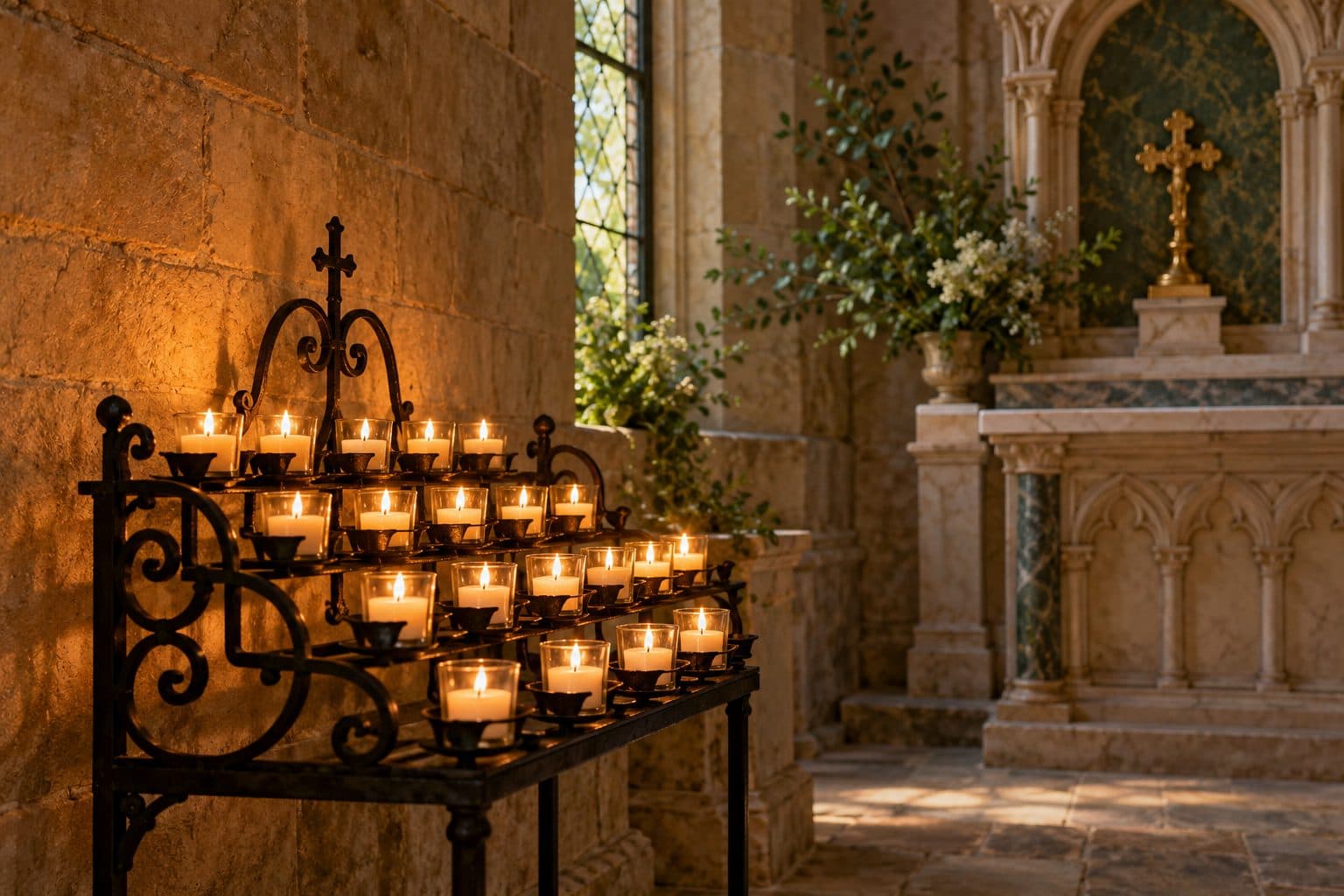
What the Pope and the Vatican said
According to the Vatican’s published text of the Angelus of October 11, 2026, Pope Leo said the nodule was found during recent medical examinations, was detected at a very early stage and is well localized, and that his doctors judged it best to intervene. He thanked people for their spiritual closeness and asked for their prayers.
On October 12, Vatican News reported that he would be admitted to the Gemelli Hospital late in the morning of Tuesday, October 13, that the stay after the operation was expected to last about a week, and that the Prefecture of the Papal Household had cancelled all papal audiences through Tuesday, October 20. It also reported that Cardinal Luis Antonio Tagle would preside at the Mass in St. Peter’s Square on Wednesday, October 14, and that those present would pray especially for the Holy Father’s health.
Update, October 13–14, 2026. According to the medical statement reported by Vatican News on October 14, surgeons removed the lower lobe of the right lung “to ensure a radical resection,” using a video-assisted technique, and an examination of the tissue during the operation “confirmed the diagnosis of lung adenocarcinoma,” which pre-operative tests had suspected. The operation lasted about 90 minutes and there were no complications. The Pope woke normally, returned to his room on the hospital’s tenth floor, asked for dinner and spent the evening with his secretaries and Vatican staff; the Press Office said his night passed calmly. Further tests on the removed tissue were to follow in the coming days, and no change had been announced to the expected hospital stay of about a week.
On the afternoon of October 14 the Press Office said blood tests and a chest X-ray confirmed that “his postoperative recovery is progressing normally.” He had done respiratory physiotherapy, begun walking around his room and resumed eating normally, and Press Office director Matteo Bruni said he concelebrated Mass that afternoon in a room prepared on the tenth floor. In a message dated October 13 and read at the close of a Vatican meeting on families on October 14, he wrote that he had been unable to be with them and asked them to “pray for me, as I pray for you.”
Update, October 17–21, 2026. The Pope was discharged from the Gemelli Hospital on Saturday, October 17, and returned to the Vatican. At the Angelus on Sunday, October 18, he said: “I would like to thank all those who have prayed for me in recent days.” He thanked the doctors, nurses and staff of the Gemelli, said the experience had made him feel close to all who live with illness, and said that he would gradually resume his activities, “always with God’s help and your prayers.” On the evening of Wednesday, October 21, the Holy See Press Office released a statement from his doctors, Dr. Luigi Carbone and Professor Stefano Margaritora: in the English published by Vatican News, the results “confirmed that the tumor was a lung adenocarcinoma and that the disease was localized,” and “a subsequent oncological assessment has confirmed that no further treatment is necessary.” That morning he had held his weekly general audience, the first since the operation. ABC News reported the same day that his apostolic journey to Uruguay, Argentina and Peru, scheduled for November 6–17, was expected to go ahead.
This page reports only what the Pope and the Vatican have said publicly, with dates. It does not speculate about his prognosis and gives no medical information. For later news on his recovery and travels, follow the Vatican News Pope page.
The traditional prayer for the Pope
For generations Catholics have prayed for the Pope with a short traditional versicle and response taken from a psalm, with the Pope’s name in place of “N.”:
V. Oremus pro Pontifice nostro Leone.
R. Dominus conservet eum, et vivificet eum, et beatum faciat eum in terra, et non tradat eum in animam inimicorum eius.V. Let us pray for our Pope, Leo.
R. May the Lord preserve him and give him life, make him blessed upon the earth, and not hand him over to the will of his enemies.
The English is this site’s own translation of the traditional Latin. The response is Psalm 41:2 (numbered 40:3 in the Latin Vulgate), turned from a promise into a request. The occasional prayers (Orationes diversae) of the 1962 Roman Missal include a collect for the Pope that asks God, “shepherd and ruler of all the faithful,” to look kindly on his servant whom he has set over his Church as shepherd, to help him do good by word and example to those in his care, and to bring him, with the flock entrusted to him, to eternal life. Many Catholics add an Our Father and a Hail Mary.
A short prayer for Pope Leo
Lord God, you strengthen the sick upon their bed and hear the prayers of your people. We thank you for Leo, our brother in Christ and the Bishop of Rome, for the skill of his surgeons and the care of all who looked after him, and for the good news of his recovery. Give him strength as he returns to his work and his journeys, and keep him in your love. Be with all who live with cancer, who are waiting for surgery or results today, or who have not received such news, and with those who love them. Through Jesus Christ our Lord. Amen.
This prayer is original to this page and may be prayed by Christians of any tradition. It is a prayer, not medical information.
The psalm behind the prayer
The traditional response comes from Psalm 41, which begins with a blessing on the one who cares for the poor and goes on to promise God’s help in sickness. Read the opening verses before using the prayer:
1 Blessed is he that considereth the poor: the Lord will deliver him in time of trouble. 2 The Lord will preserve him, and keep him alive; and he shall be blessed upon the earth: and thou wilt not deliver him unto the will of his enemies. 3 The Lord will strengthen him upon the bed of languishing: thou wilt make all his bed in his sickness.Read Psalm 41 in context · King James Version →
The third verse pictures God strengthening the sick “upon the bed of languishing.” The letter of James likewise tells the sick to call for the elders of the church to pray over them, and says that “the prayer of faith shall save the sick” (James 5:13–16).
The church prayed for Peter
Catholics understand the Pope as the successor of the apostle Peter. In the book of Acts, when Herod had Peter imprisoned, “prayer was made without ceasing of the church unto God for him” (Acts 12:1–17). When Peter was set free, he went to a house where many were gathered praying.
Jesus himself told Peter, “I have prayed for thee, that thy faith fail not” (Luke 22:31–32). Paul told the Corinthians, after he had “despaired even of life,” that they were “helping together by prayer for us” (2 Corinthians 1:8–11), and told Timothy that prayers should be made “for all men; for kings, and for all that are in authority” (1 Timothy 2:1–4).
How Christian traditions pray for the Pope
Catholic. The Pope is named in the Eucharistic Prayer of the Mass; in the Latin Roman Canon the priest offers the sacrifice una cum famulo tuo Papa nostro N., together with the Pope, naming him. The versicle above and the Our Father and Hail Mary are common private prayers for him, and Catholics see praying for the Pope as part of their communion with him.
Orthodox. The Orthodox churches do not accept the Pope’s universal jurisdiction, and their Divine Liturgy commemorates their own bishops by name. Its litanies also pray for the sick and the suffering. An Orthodox Christian who prays for Pope Leo now prays for a sick fellow Christian, not in recognition of his claimed authority.
Protestant. Protestant churches reject the papacy’s claims of authority, and some historic Protestant confessions spoke of it in severe terms. Many Protestants nonetheless read 1 Timothy 2 and James 5 as reasons to pray for a sick public figure and church leader, whatever they think of his office.
These are summaries of each tradition’s position in general terms, not statements by any church about this news. For more on prayer itself, see how to pray and the prayer library.