Hot topic · Church year
Is Day of the Dead Christian? Aztec roots, All Souls, and what the Bible actually forbids
Partly. Day of the Dead, or Día de los Muertos, is a Mexican custom kept on All Saints’ Day and All Souls’ Day, November 1 and 2, so its dates are Christian, and some historians say much of its shape is too. It is not a feast of the Church, and many of its beliefs, above all the idea that the dead come back for the night to share the food left for them, are not church teaching. Historians still argue over how much is Aztec and how much is Spanish Catholic. The Bible never mentions it. It does let believers grieve with hope and remember the dead, and it forbids consulting them. One verse also shows Israel keeping its holy food from the dead. Below: where it came from, what those verses say, how Christians differ, and where we draw the line.
Why people are asking
“Dia de los muertos” appeared on Google’s trending searches for Britain on November 1. Wales Online reported that day on a Day of the Dead event in Swansea, and The Courier-Journal a festival in Louisville on October 31. UNESCO added the “Indigenous festivity dedicated to the dead” in Mexico to its Representative List of the Intangible Cultural Heritage of Humanity in 2008 (it was first proclaimed in 2003), and Pixar’s Coco carried the rituals to many more people in 2017. Some who now paint a sugar skull on their face may never have been told what it means, and Christians are asking whether they should join in.
Aztec, Catholic or both?
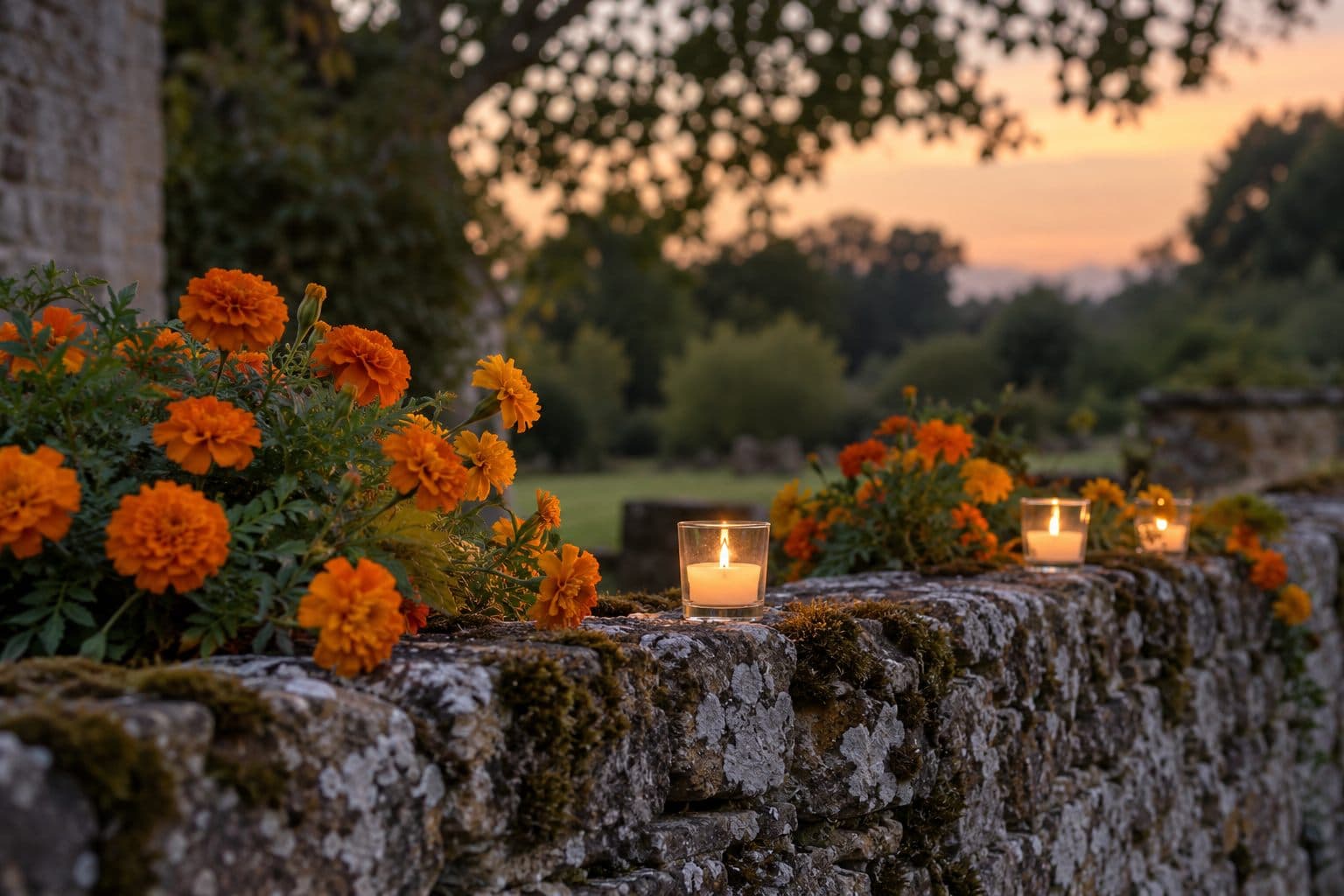
The usual story runs like this. Peoples of central Mexico honoured the dead long before the Spanish came; the Aztecs did so in a month of their calendar around late July and early August, linked to the goddess Mictecacihuatl. After the conquest the feast moved to Allhallowtide, the Christian days of All Saints and All Souls, and the old and new were joined. That is broadly how Kirby Farah, an anthropologist at the University of Southern California, tells it. Farah writes that many practices and beliefs “remained deeply indigenous,” and that the marigold, the Aztec cempasúchil, “probably has indigenous origins.”
Other scholars push back. The art historian Ruben Cordova argues that the festival’s Catholic roots “have been ignored or underestimated”: Mass, cleaning graves and home altars came from Europe, and so did candles, bread and sugar. He cites the anthropologist Stanley Brandes, who argues that stressing the Indigenous side helps Mexico distance itself from Spain and the United States. Father Charles Grondin at Catholic Answers notes the same split: some trace it to the Aztecs, others to medieval Europe.
The Christian half is easier to date. The annual commemoration of all the faithful departed spread from the abbey of Cluny under Abbot Odilo in the eleventh century, and later reached the wider Western Church. Skeleton imagery, meanwhile, owes a great deal to the Mexican printmaker José Guadalupe Posada, whose satirical La Calavera Catrina dates from about 1910. And History.com notes that some family altars also hold a crucifix or an image of Our Lady of Guadalupe, beside copal incense and the food of the departed. It is one custom with several roots, and a family’s altar can lean either way.
What the Bible says
Grief and memory are fine. Paul does not tell the Thessalonians not to grieve. He tells them not to “grieve like the rest, who are without hope” (1 Thessalonians 4:13). Hebrews pictures the faithful dead as “such a great cloud of witnesses” (Hebrews 12:1). And Paul can mock death itself: “Where, O Death, is your victory?” (1 Corinthians 15:55). Some Christians see room here to laugh at a skeleton, because “the last enemy to be destroyed is death” (15:26).
Seeking out the dead is not. The law is blunt: let no one be found who “consults a medium or spiritist, or inquires of the dead” (Deuteronomy 18:11). Isaiah asks, “Why consult the dead on behalf of the living?” (Isaiah 8:19). When Saul does it at Endor (1 Samuel 28:7), it is the last step of his collapse.
Food for the dead. This is the closest the Bible comes to the question. An Israelite bringing his tithe had to say: “I have not … offered any of it for the dead” (Deuteronomy 26:14). The context is holy food, so it does not forbid a family meal. Interpreters differ on whether it means grave offerings, funeral meals or rites linked to Baal, but on each reading holy food stays away from the dead. Whether it rejects feeding the dead altogether is disputed: many Protestants and a number of scholars read it that way, while Robert Setio, drawing on other scholars, argues that it protects the tithe and that feeding the dead and worship of Yahweh were complementary in ancient Israel. One verse can look like support for feeding the dead. The Douay–Rheims of Tobias, a book in the Catholic and Orthodox Bibles but not the Protestant canon, has Tobias told: “Set thy bread, and thy wine upon the burial of a just man” (Tobias 4:18; Tobit 4:17 in the New American Bible). The New American Bible’s note thinks it most likely means comforting the bereaved family, or else alms in honour of the dead. Neither of those readings has anyone feeding them.
Do the dead come back? Jesus’ story of the rich man has Abraham say that “a great chasm has been fixed… nor can anyone cross from there to us” (Luke 16:26). Most read it as a parable, so it may not be a map of the afterlife, but it points one way. “Man is appointed to die once, and after that to face judgment” (Hebrews 9:27). And answering the Sadducees on the resurrection, Jesus says God “is not the God of the dead, but of the living” (Matthew 22:32): Christians read that as Abraham alive to God now, not on a yearly visit home.
What the Bible does not say
It says nothing about Day of the Dead, ofrendas, sugar skulls or marigolds. It does not ban visiting graves, keeping photographs, telling stories or cooking a parent’s favourite meal. It does not say that a skull on a face is a sin. It does not teach that the dead are lost to us altogether, and it does not teach that they return once a year. And it does not settle, for all Christians, whether we may pray for the dead: the book that says so most plainly is not in every Bible.
How Christians differ
Catholic. Father Grondin writes that “it is not a Catholic celebration,” but that many Catholics keep it, and that they may, as long as it does not contradict or blur the essentials of the faith. He would rather American Catholics kept it instead of Halloween. Prayer for the dead itself is firm Catholic teaching: the Catechism (no. 1032) points to 2 Maccabees, which the Douay–Rheims gives as “a holy, and healthful cogitation to pray for the dead” (12:46). What a senior Vatican official has condemned is something else: Cardinal Gianfranco Ravasi called the devotion to Santa Muerte, a skeletal “Holy Death” venerated in Mexico, a “degeneration of religion” in 2013. That cult is not the same as Day of the Dead, and the two should not be confused.
Eastern Orthodox. The Orthodox have no Day of the Dead, but they are not strangers to food beside the grave. Churches keep Saturdays of Souls with prayers for the departed and koliva, boiled wheat blessed at memorial services. On Radonitsa, in the second week of Easter, Russian, Ukrainian and Belarusian Orthodox go to the cemetery, sing Easter hymns, greet the dead with “Christ is risen,” often leave an Easter egg on the grave, and eat blessed food there. The egg is a sign of the resurrection, the blessed meal is eaten by the living, and the prayer goes to God.
Evangelical and Reformed. Mexican evangelicals are among the custom’s firmest critics. In a 2021 Christianity Today forum, Sally Isáis in Mexico City said Christians should not take part, quoting Cirilo Cruz, president of the National Evangelical Fraternity of Mexico: “Every altar to the dead has idols.” Heidi Carlson said Christians can mourn with those who mourn while avoiding ancestor worship, and Alexia Salvatierra called it an issue Christians can disagree on. Emanuel Elizondo, writing for The Gospel Coalition, warns of serious spiritual problems behind the festivities, but suggests some aspects might be redeemed. Behind the caution stands the Reformation: the Westminster Confession (21.4) says prayer is to be made for the living “but not for the dead.”
These are summaries in general terms. Practice varies a great deal from one village, parish and family to another.
Our take
This is our opinion, not a report. The line is not the face paint. It is the direction of the prayer. Talk to God about your dead, and you are on Christian ground. Set a place so that your dead will come and eat, and you have left it.
We think too many Christians argue about the wrong thing. Some treat every marigold as a danger, and in doing so they turn away grieving families and hand the graveyard to anyone else who will sit there. We disagree. Cleaning a grave, telling the children about their grandmother and eating her recipe is what love does, and a faith that believes in the resurrection of the body has no reason to be afraid of a cemetery. A skull that says death has lost is very nearly a sermon on 1 Corinthians 15.
But we also disagree with the easy answer that it is all just Catholic culture and harmless. A belief widely reported is that the dead return in these days, drawn by scent and light, to visit and share what is set out. History.com says marigold scent “helps guide the souls home,” and UNESCO itself says families “facilitate the return of the souls to Earth.” That belief is not in Scripture, and it does not become Christian by landing on November 2 or sitting beside a crucifix. Calling the mix “syncretism,” a blend of religions, does not excuse it. Father Grondin’s test is right, and we think it deserves to be applied more strictly than it usually is: if a family is feeding the dead, or asking them for favours, we think it has left Christian ground, whatever the parish calendar says. Deuteronomy 18 is clear on seeking the dead. On food, 26:14 is less direct and scholars dispute it, but we read it as pointing the same way. Catholics and Orthodox ask the saints to pray for them. Protestants reject that too, but it is a request for prayer to God, not a bargain with the dead.
The Orthodox have kept the better form. Go to the grave, take the food, eat it yourselves, and sing that Christ is risen. And to Protestants who think prayer for the dead is the issue: it is a real disagreement, and it is not this one. You can reject that prayer and still share the grief. Nobody needs a skull costume to join in, and nobody at the graveside needs a lecture. If you are there as a guest, take flowers.
Over to you
How does your family remember its dead, and where would you draw the line between love and something else? Tell us below.
Comments
No comments yet. Start the conversation; comments are public and checked for spam. How comments are handled