Hot topic · Faith and film
Is Aslan Jesus? What C.S. Lewis said, what the Bible says, and why Meryl Streep’s Aslan has Christians arguing
Yes. Aslan is Jesus as C.S. Lewis imagined him in another world, and Lewis said so about as plainly as an author can. He did not mean that Aslan is a code for Jesus, a costume to be decoded scene by scene. He meant something bolder: suppose there were a world of talking animals, and suppose the Son of God chose to become one of them, to die there and rise again; what would he be like? Aslan was his answer. The Bible gave him the lion: Jesus is called “the Lion of the tribe of Judah” (Revelation 5:5). The question is back because Meryl Streep is the voice of Aslan in Greta Gerwig’s Narnia: The Magician’s Nephew, and this week Liam Neeson, who voiced the lion in the earlier films, heard the news in an interview and asked, “Meryl is playing Jesus Christ?” Below: what is in the news, what Lewis said, the Scripture behind the lion, whether a woman’s voice changes anything, how Christians differ, and our view, which is that the outrage is aimed at the wrong thing.
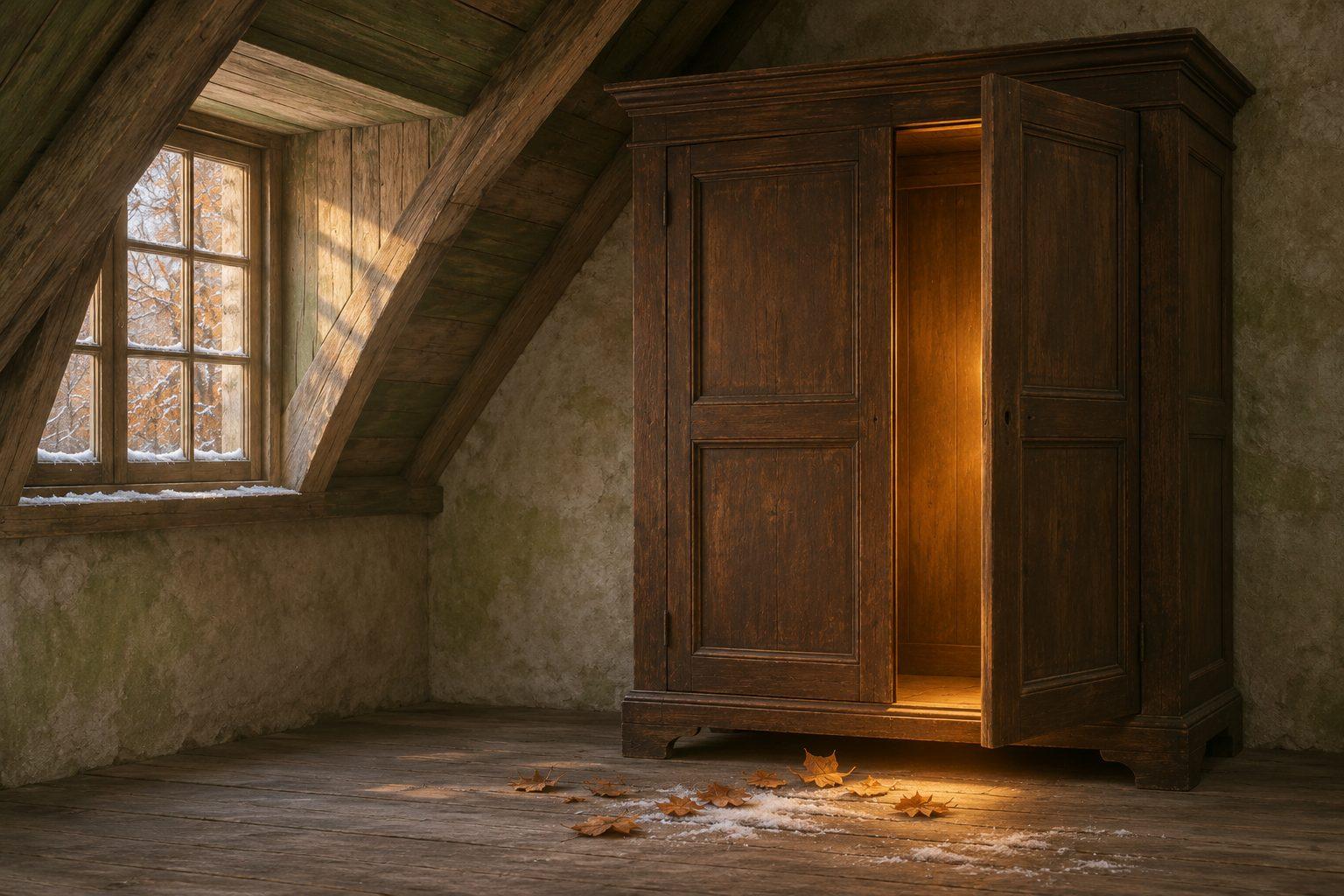
Why it is in the news
Netflix’s Narnia: The Magician’s Nephew, written and directed by Greta Gerwig, is due in cinemas on February 12, 2027 and on Netflix on April 2, 2027. In September 2026 the casting of Meryl Streep as the voice of Aslan became public; Gerwig discussed it with Empire. The Deseret News reported on September 22 that the news split viewers. The commentator Isabel Brown wrote on X that it was “a slap in the face to the genius of Lewis”; another user wrote that Aslan is based on Jesus and “Jesus is a man.” Others pointed out that it is not uncommon for women to voice male characters in animation, and the entertainment journalist Jeff Sneider called it “A+ outside-the-box casting.”
The argument flared again in early November 2026, when Liam Neeson learned of the casting in an interview with ScreenRant, as the A.V. Club reported on November 5. “I’m sorry, this is news to me,” he said; then, “Meryl is playing Jesus Christ?” and finally, “Well, if you’re going to make Christ a lady, nobody better than Meryl.” Within days the remark had run in Variety, Deadline, the Independent, Entertainment Weekly, Crosswalk and ChurchLeaders. Neeson was joking, but he put the real question in one line: if Aslan is Christ, does it matter who gives him a voice?
What C.S. Lewis said about Aslan
Lewis was asked about Aslan by readers, many of them children, for the rest of his life, and his answers were consistent. In a letter to a Mrs Hook in December 1958 he said of Aslan, “This is not allegory at all.” In an allegory, each figure stands for an idea: a character called Despair is despair. Lewis described Aslan instead as a “supposal”: an imagined answer to the question of what Christ might be like if there really were a world like Narnia and he chose to be incarnate, die and rise again there. In a letter of March 1961 he gave three reasons for making him a lion: the lion is the king of beasts; Christ is called the Lion of Judah in the Bible; and he had been dreaming about lions when he began the books.
The stories bear this out. In The Lion, the Witch and the Wardrobe (1950), Aslan gives himself up to be killed on the Stone Table in place of Edmund, a traitor, and comes back to life the next morning. In The Voyage of the Dawn Treader (1952), he appears to the children at the end of the world first as a lamb, then as a lion, and tells them that he is in their world too, where he has another name, and that they were brought to Narnia so that they might know him better there. In The Magician’s Nephew (1955), the book Gerwig is filming, Aslan sings the world of Narnia into being out of darkness. It was published sixth, and Lewis finished it after The Last Battle, but its story comes first: it is Narnia’s Genesis.
The Bible behind the lion
The lion comes straight from the last book of the Bible. In John’s vision of heaven, no one can open the sealed scroll of history, and John weeps, until an elder speaks:
5 Then one of the elders said to me, “Do not weep! Behold, the Lion of the tribe of Judah, the Root of David, has triumphed to open the scroll and its seven seals.” 6 Then I saw a Lamb who appeared to have been slain, standing in the center of the throne, encircled by the four living creatures and the elders. The Lamb had seven horns and seven eyes, which represent the seven spirits of God sent out into all the earth.Read Revelation 5 in context · Berean Standard Bible →
John is told to look for a lion and turns to see a lamb that has been slain. That is the whole of Aslan in two verses: the king who conquers by being killed. It is why Lewis has Aslan appear as a lamb at the end of the Dawn Treader. The title “Lion of the tribe of Judah” goes back to Jacob’s blessing on his son Judah, “a young lion” from whom the sceptre will not depart (Genesis 49:9–10), and the prophets more than once give God himself a lion’s roar: “He will roar like a lion. When He roars, His children will come trembling” (Hosea 11:10); “The lion has roared — who will not fear?” (Amos 3:8).
The rest of Aslan’s story follows the Gospels. His death on the Stone Table in Edmund’s place echoes Jesus’ words that he came “to give His life as a ransom for many” (Mark 10:45). His song that calls Narnia into being echoes the opening of John’s Gospel: “Through Him all things were made” (John 1:3), and God’s question to Job about the morning of creation, “while the morning stars sang together” (Job 38:7).
What Aslan is not
Aslan is not in the Bible, and Narnia is not Scripture. Lewis would have been the first to say so. The Bible does not tell us that Christ became a lion in another world; it tells us that “the Word became flesh and made His dwelling among us” (John 1:14), in one world, as one man, Jesus of Nazareth. Aslan is a work of imagination built on that fact, and a reader can love him without treating every detail as doctrine. Parts of Narnia, such as the “deeper magic” of the Stone Table, are Lewis’s own pictures of the atonement, not a summary of what any church teaches about it.
Nor does the Bible give God a body or a sex. Moses reminded Israel that they “saw no form of any kind” when the Lord spoke at Horeb, and warned them against any image “in the likeness of a male or female” (Deuteronomy 4:15–16). The Son became a man; the Father and the Spirit did not.
Does a woman’s voice change Aslan?
Two things in Scripture pull in different directions here, and both deserve to be heard.
The first is that Jesus was, and is, a man. The incarnation is not an idea that could have taken any shape; it happened in a particular body, in a particular family, in a particular time. And the Bible names God as Father and Jesus as Son. Christians who object to Streep’s casting are not, for the most part, objecting to women. They are saying that if Aslan is Christ, his maleness is part of the picture, and changing it alters something the original meant to show. C.S. Lewis himself argued, in his 1948 essay “Priestesses in the Church?”, that the masculine language Christians use of God is not a mere convention that can be swapped at will.
The second is that Scripture itself gives God feminine images, including at the creation of the world, the very event The Magician’s Nephew is about. God says, “As a mother comforts her son, so will I comfort you” (Isaiah 66:13). Jesus says he longed to gather Jerusalem’s children “as a hen gathers her chicks under her wings” (Matthew 23:37). Hosea pictures God as “a bear robbed of her cubs” (Hosea 13:8). And in Proverbs, Wisdom, who calls out and raises her voice (Proverbs 8:1), speaks of being with God at the making of the world:
29 when He set a boundary for the sea, so that the waters would not surpass His command, when He marked out the foundations of the earth. 30 Then I was a skilled craftsman at His side, and His delight day by day, rejoicing always in His presence. 31 I was rejoicing in His whole world, delighting together in the sons of men.Read Proverbs 8 in context · Berean Standard Bible →
From the second century on, many Christian writers read this Wisdom as Christ, and Paul calls Christ “the power of God and the wisdom of God” (1 Corinthians 1:24). That is an interpretation, not a statement of the text; Proverbs 8 is first a poem about wisdom itself. But it means that a female voice rejoicing at the creation of a world is not foreign to the Bible. It is in it.
How Christians differ
Catholic. The Catechism of the Catholic Church says that God’s “parental tenderness can also be expressed by the image of motherhood,” and that “God transcends the human distinction between the sexes. He is neither man nor woman: he is God” (paragraph 239; see also 370). It also teaches that the eternal Son became a man, and the Church calls God “Father” because Jesus did. Catholic responses to the casting have varied.
Orthodox. The Orthodox tradition has thought hard about images of Christ. The Council in Trullo (692), whose canons the Orthodox churches receive, ruled in its 82nd canon that Christ should from then on be shown in icons in his human form rather than as a lamb, because the incarnation itself should be seen. For many Orthodox readers the point of Aslan is that he is not an icon, and they treat him as a story, not an image of Christ; for some, a deliberate change of his sex is a change to the one thing the image is meant to carry.
Evangelical Protestant. Lewis has long been a hero to evangelicals, and much of the loudest criticism of the casting has come from them. Many complementarian evangelicals, who hold that Scripture gives men and women different roles in the church and the home, see the masculine names for God as revealed and not interchangeable, and see the casting as a cultural statement made through a beloved Christian story. Other evangelicals answer that Aslan is a lion, not a man, that animated animals have been voiced by actors of both sexes for decades, and that the film should be judged on whether it keeps Aslan’s death and resurrection.
Mainline Protestant. Many mainline churches already use feminine images of God in some prayers and hymns, drawing on the verses above, while still praying to God as Father in the Lord’s Prayer and the creeds. Their members are generally relaxed about the casting. These are broad summaries; within every tradition, people disagree.
Our take
This is our opinion, not a report. Aslan is Jesus as Lewis imagined him; a woman’s voice will not make him less so, and the outrage is aimed at the wrong thing.
The critics are right about one thing: Aslan is Christ, and Christians are entitled to care what is done with him. But they have picked the wrong test. Lewis did not make Aslan Christ by making him male; he made him Christ by making him the Creator who sings a world into being, the king who dies for a traitor, the one who is, in Mr Beaver’s words in The Lion, the Witch and the Wardrobe, not safe but good. And the Bible itself is freer with its images of God than the loudest objectors: it gives him a lion’s roar and a mother’s comfort, and it gives the voice that rejoiced at the making of the world to a woman called Wisdom. A female voice singing Narnia into being is closer to Proverbs 8 than many objectors have noticed.
So judge the film on the things that make Aslan Christ. Does he make the world, or merely decorate it? Is he good without being tame? When the time comes in later films, does he die for Edmund and rise? If Gerwig keeps those, the voice is a detail. If she loses them, a deep male voice would not have saved it. Neeson’s joke landed because it was half right: whoever plays Aslan is, in a sense, playing Jesus Christ. That should make Christians ask what the film says about him, not what pitch he speaks in.
Over to you
When you first read Narnia, what was the moment you realised who Aslan was, and would a different voice have changed it for you? Tell us below.
Comments
No comments yet. Start the conversation; comments are public and checked for spam. How comments are handled