Hot topic · In the news
Day of Prayer for the Persecuted Church 2026 (November 1): who is suffering now, what the Bible says, and a prayer
The International Day of Prayer for the Persecuted Church (IDOP) is kept on Sunday, November 1, 2026, and in some churches on Sunday, November 8. The World Evangelical Alliance, which leads it, asks churches to pick whichever Sunday fits. It comes in a hard week: the Ethiopian Orthodox Church says at least 60 of its members were killed in two attacks in Ethiopia’s Oromia region on October 20 and 24, a funeral at a church in Karak, Jordan, was attacked on October 23, and on October 27 the Catholic charity Aid to the Church in Need reported that conditions for Christians had worsened in more than half of the 18 countries it studied, with none improving. Below are the facts with dates and sources, what the Bible says about persecution and what it does not, how churches differ, our own take, and a prayer you can use on Sunday.
What the day of prayer is
IDOP is an annual day on which churches pray for Christians who suffer for their faith. According to the World Evangelical Alliance, it began in 1994 as a rapid prayer call for Christians in Iran and became a worldwide day of prayer in 1996. It is kept on a Sunday in early November; for 2026 the Alliance gives November 1 and 8. Its 2026 theme is built on 2 Timothy 3:10–12 and asks the wider church whether it really knows the believers it prays for.
In the United States, Baptist Press reported on October 29 that the Southern Baptist Ethics & Religious Liberty Commission and International Mission Board are encouraging churches to observe it on November 1, and that The Voice of the Martyrs, Open Doors US and Iran Alive Ministries are calling for prayer too. Todd Nettleton of The Voice of the Martyrs called the day “a practical response to their number one request”: prayer. In Western churches November 1 is also All Saints’ Day, when the church remembers its saints, the martyrs among them.
What happened this week
Ethiopia. The Holy Synod of the Ethiopian Orthodox Tewahedo Church said 14 people were killed in Merti district on October 20 and 46 in Shirka district on October 24, both in the Arsi Zone of Oromia, with more than 20 seriously wounded and 20 homes burned (Associated Press and Al Jazeera, October 27). The church called the killings “brutal and merciless massacres” and asked the authorities to condemn them publicly, protect civilians and bring those responsible to justice. A spokesperson for the Oromia regional government, Hailu Adugna, blamed the rebel Oromo Liberation Army but, AP reported, presented no evidence; the group could not be reached, and its leader told AP in February that its fighters do not target civilians. No group had claimed the attacks. The figures come from the church and have not been independently confirmed. This page does not say who carried out the attacks, because that has not been established.
Jordan. On October 23 gunmen attacked mourners at a funeral at St George Greek Orthodox Church in Hamoud, in Jordan’s Karak governorate; several outlets reported nine dead. Our page on the Karak attack has the reported details and a prayer.
The report. On October 27 Aid to the Church in Need (ACN), a Catholic charity, published Persecuted and Forgotten? A Report on Christians Oppressed for Their Faith 2024–26, covering August 2024 to June 2026. It found that conditions worsened in almost 56% of the 18 countries it examined and improved overall in none. It names extremist violence, authoritarian governments and religious nationalism as the main drivers. Among its findings, as reported by ACN USA and Vatican News: more than 3.5 million people displaced within Nigeria; more than 2,000 Christians killed in Mozambique’s Cabo Delgado since the insurgency began in 2017, according to ACN USA (Vatican News gives more than 1,000); arrests of Christians in Iran nearly doubling over twelve months; and more than 700 incidents of anti-Christian violence recorded in India in 2025. The report also notes that ethnicity, political instability, poverty and competition for land often overlap with religious identity.
How many Christians are persecuted?
You will see two big numbers this week, and both are right on their own terms:
- About 220 million: ACN’s estimate of Christians “directly exposed to persecution.” ACN also counts 413 million Christians living in countries where serious violations of religious freedom occur.
- 388 million: the Open Doors World Watch List 2026, published in January, which counts Christians facing high levels of persecution and discrimination between October 1, 2024 and September 30, 2025, up from about 380 million the year before (AsiaNews, January 14, and Vatican News, January 15, 2026). This is the figure Baptist Press used.
The difference comes from what each one counts, not from one side being wrong: Open Doors scores pressure in daily life as well as violence, while ACN’s narrower figure counts people directly exposed to persecution. Either way, it is one of the largest groups of people under pressure for any belief in the world.
What the Bible says about persecution
Remember them as if you were there. The verse most quoted for this day is a command, not a suggestion:
3 Remember them that are in bonds, as bound with them; and them which suffer adversity, as being yourselves also in the body.
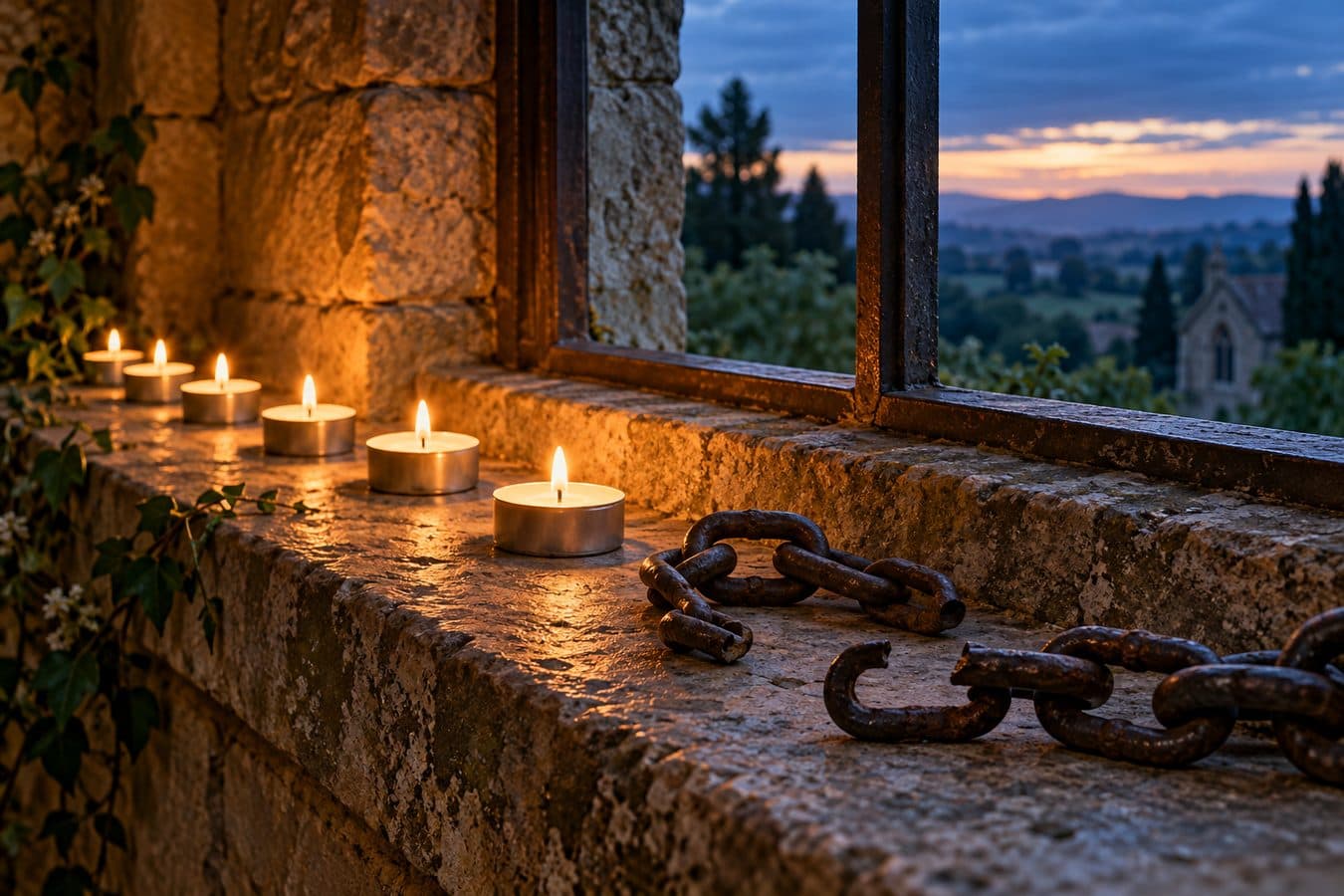
“As bound with them” asks for more than sympathy from a distance: the writer tells the church to remember prisoners as if sharing their chains. Paul gives the reason in his picture of the church as one body:
26 And whether one member suffer, all the members suffer with it; or one member be honoured, all the members rejoice with it.
Persecution is expected, not strange. This year’s theme verse is Paul’s own record, written to Timothy:
10 But thou hast fully known my doctrine, manner of life, purpose, faith, longsuffering, charity, patience, 11 Persecutions, afflictions, which came unto me at Antioch, at Iconium, at Lystra; what persecutions I endured: but out of them all the Lord delivered me. 12 Yea, and all that will live godly in Christ Jesus shall suffer persecution.Read 2 Timothy 3 in context · King James Version →
Jesus said the same: “If they have persecuted me, they will also persecute you” (John 15:18–20), and “In the world ye shall have tribulation: but be of good cheer; I have overcome the world” (John 16:33). He called the persecuted blessed:
10 Blessed are they which are persecuted for righteousness' sake: for theirs is the kingdom of heaven. 11 Blessed are ye, when men shall revile you, and persecute you, and shall say all manner of evil against you falsely, for my sake. 12 Rejoice, and be exceeding glad: for great is your reward in heaven: for so persecuted they the prophets which were before you.
Not every suffering is persecution. Peter draws a line that matters for how we use the word:
12 Beloved, think it not strange concerning the fiery trial which is to try you, as though some strange thing happened unto you: 13 But rejoice, inasmuch as ye are partakers of Christ's sufferings; that, when his glory shall be revealed, ye may be glad also with exceeding joy. 14 If ye be reproached for the name of Christ, happy are ye; for the spirit of glory and of God resteth upon you: on their part he is evil spoken of, but on your part he is glorified. 15 But let none of you suffer as a murderer, or as a thief, or as an evildoer, or as a busybody in other men's matters. 16 Yet if any man suffer as a Christian, let him not be ashamed; but let him glorify God on this behalf.Read 1 Peter 4 in context · King James Version →
Suffering “as a Christian,” for the name of Christ, is one thing; suffering for wrongdoing, or for being “a busybody in other men’s matters,” is another.
How to respond. Believers are told to “bless them which persecute you: bless, and curse not” (Romans 12:14) and to pray for their persecutors (Matthew 5:44). They are also allowed to escape: “when they persecute you in this city, flee ye into another” (Matthew 10:23). And the church’s first response to an arrest was prayer: when Peter was in prison, “prayer was made without ceasing of the church unto God for him” (Acts 12:5). The martyrs in Revelation 6:9–11 cry “How long, O Lord, holy and true, dost thou not judge and avenge our blood on them that dwell on the earth?”, so asking for justice is not a lack of faith.
What the Bible does not say. It does not promise that faithful Christians will be kept from harm, and it does not say that every attack on Christians is an attack on their faith. Whether a killing was religious, ethnic or political is a question of fact for investigators, not something a verse settles. Nor does Scripture tell Christians to stay silent: Paul appealed to his rights as a Roman citizen (Acts 22:25–29) and to Caesar (Acts 25:10–11).
What different Christians think
Every Christian tradition prays for the persecuted, but they keep it differently and disagree on a few real questions.
- Evangelical and other Protestant churches keep IDOP itself, which is led by the World Evangelical Alliance and promoted by groups such as The Voice of the Martyrs and Open Doors. Their stress falls on prayer by name, letters to prisoners and support for persecuted believers, often converts from other religions.
- Catholics have no day of their own on this date (November 1 is All Saints), but the Church honours martyrs throughout its calendar, and ACN, a pontifical foundation, publishes the report quoted above. Its US release quoted Bishop Robert Brennan of Brooklyn: “What is shocking is just how mainstream — dare I say tolerated —” the persecution of Christians is.
- Orthodox churches, Eastern and Oriental, remember many martyrs by name in their calendars, and this week’s attacks in Ethiopia and Jordan struck Orthodox communities. The Ethiopian Orthodox Tewahedo Church, one of the oldest churches in Africa, is an Oriental Orthodox church.
Where they disagree. First, what counts: some Christians want “persecution” kept for violence and imprisonment, others include laws against conversion, job loss and social pressure, which is why the counts above differ. Second, religion or politics: in places like Ethiopia and Nigeria, analysts and church leaders disagree about how much the violence is aimed at Christians as Christians and how much it comes from ethnic conflict, land and insurgency; ACN itself says these factors overlap. Third, how to respond: some churches press governments to act and fund advocacy, while others warn against tying the persecuted church to Western politics, and some point to the early church, which mostly prayed, endured and sometimes fled.
Our take
This is our editorial view, not a statement of any church’s teaching.
Two things. First, pray by name, not by number. Hebrews says “as bound with them,” and you cannot feel bound to 220 million or 388 million people. You can learn the name of Merti and Shirka districts, of St George’s in Hamoud, of one prisoner, and pray for them as for members of your own body. The arguments over which count is right miss the point: even the smaller number is enormous.
Second, and some readers will not like this: Christians in free countries should stop calling their own lost arguments “persecution.” Being mocked online, losing a vote or seeing a law go the wrong way can be real wrongs, but they are not what happened in Shirka last Saturday. Peter separates suffering “as a Christian” from other suffering, and when Western believers use the same word for a cancelled event and for a massacre, the word stops working for the people who need it most. Keep the word for them, and give them your Sunday.
A prayer for the persecuted church
Lord Jesus Christ, you were hated before your people were hated, and you have overcome the world. We pray for our brothers and sisters who suffer for your name: for the families of those killed in Merti and Shirka in Ethiopia and in Hamoud in Jordan, for Christians driven from their homes in Nigeria and Mozambique, and for believers in prison in Iran and wherever faith is a crime. Give rest to those who have died, healing to the wounded, and courage to those who are afraid. Be with those in chains as if we were bound with them, and do not let us forget them when this Sunday is over. Turn the hearts of those who persecute, give justice to rulers and judges, and keep us from hatred. Teach us to know by name those we pray for. Amen.
This prayer is original to this page and may be prayed by Christians of any tradition. For prayers for the dead, see prayers for the dead and for funerals.
Your turn
Which persecuted church will you pray for by name this Sunday, and what do you actually know about the Christians there? Tell us below.
Comments
No comments yet. Start the conversation; comments are public and checked for spam. How comments are handled